Why Closed Posture Happens and How the “Bridge Pose” is the Solution You Need
Feb 26, 2026
We’ve all felt it, that all too common neck stiffness, that tightness across the shoulders, that ache in the lower back after sitting too long. These discomforts are the result of muscle imbalances, often caused by closed posture.
Back and neck pain caused by muscle imbalances are a massive public health issue. The World Health Organization reports that low back pain affected 619 million people globally in 2020 and is the single leading cause of disability worldwide.
Let’s explore why these imbalances and closed posture develop and, more importantly, how you can reverse them with bridge pose exercises, also known as “The Perfect Bridge” here at Core Balance Training.
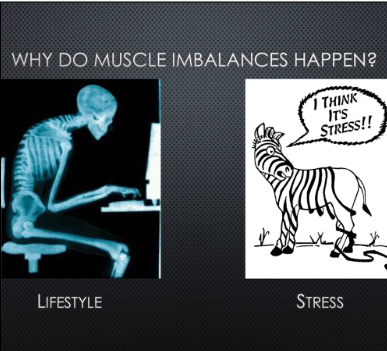
Lifestyle Has Created the Modern Posture Problem
Lifestyle has played a huge role in creating the modern posture problem. A lot of it comes down to the amount of time we spend in front of our computers and phones and the repetitive motions that using those devices create. Add in long communities in a car or on public transit, and those sedentary hours with awkward posture really add up.
Research shows that sedentary behavior that is common in modern offices is associated with a higher risk of low back pain, and that sitting becomes especially problematic when it’s paired with sustained awkward posture.
Sitting, in particular, creates the perfect recipe for cross-posture syndrome, meaning:
- Hip flexors stay shortened and dominant from being in a flexed position for long periods
- Glutes become weakened and lengthened
- Core support disengages, so the lower back muscles end up doing stabilization work
- Shoulders round and the head drifts forward, which increases stress on the neck as that forward angle grows
And I’m not saying don’t sit. It’s part of our everyday life and it’s unavoidable for a lot of people. While sitting is inevitable, it’s staying sitting for too long where the problems start to develop. You need to interrupt the pattern of sitting for long enough to keep your body from getting stuck into muscle imbalances.
There’s plenty of research on “microbreaks” to back this up, too. Frequent breaks can reduce musculoskeletal discomfort and help counter accumulated strain without needing a full workout in the middle of your day.
Simply standing up, stretching, and moving around regularly can help interrupt the cycle.
Stress Is the Hidden Driver of Closed Posture & Imbalances
The second big factor is stress, and this is where things get interesting.
Stress isn’t just mental because it also lives in the body. Think about how your shoulders creep up to your ears when you’re anxious, or how your jaw tightens under pressure. That’s your body holding tension in response to stress.
That is all because our subconscious interprets stress as danger. And when that happens, It triggers a built-in survival instinct and protection mode. Protection mode looks the same across nature. For example flowers close up, animals curl tight, and humans hunch forward into the fetal position.
Even when you’re not physically curling up, chronic low-level stress keeps feeding tension into the muscles that pull you forward, while shutting down the ones that should keep you upright. Over time, this “closed” posture hardens into muscle imbalance.
Can You Reopen a Closed Posture? Absolutely.
Just like flowers that can close and reopen, that chronic stress posture within our bodies is reversible too.

The Bridge Pose: A Simple, Powerful Exercise
If you take just one thing away from this entire post, let it be the power of the bridge pose.
Why it works so well:
- It directly counters the sitting posture.
- It strengthens the glutes and abdominals (the muscles most likely to shut down).
It stretches and lengthens the hip flexors and lower back muscles (the ones that tend to tighten).
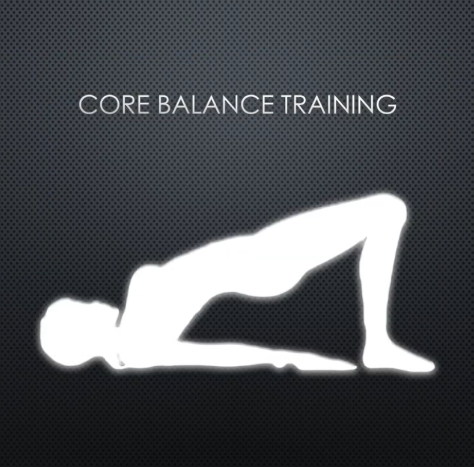
Before you lift, take a slow breath out and feel your ribs soften down. Think “long spine,” not “big arch.”
Then, press through your heels and squeeze your glutes to lift your hips just a few inches. Only lift as high as you can go without stressing your lower back. Pause for 2-3 seconds at the top, keeping your pelvis level, then lower slowly.
And the best part? It’s accessible for nearly everyone.
- Start small, just lifting your hips a little off the bed or floor.
- Over time, progress into a fuller bridge.
- You can hold the position or do repetitions, and it only takes about a minute.
Done daily, this one simple move can have a massive impact on how you feel.
Reconnecting with Your Core to Overcome Closed Posture
For people with severe or long-term imbalances, sometimes the core feels completely “shut off.” In these cases, the first step isn’t even strengthening. Instead, it’s going to be redeveloping an awareness of these muscles.
Simple exercises focused on breathing, gentle engagement, and reconnecting with the core muscles can reforge this mind-body connection that may be missing in someone whose core was inhibited.
From there, strengthening and rebalancing becomes possible.
A Note on Sleep & Posture
You might wonder if sleeping in the fetal position makes things worse? The truth is that sleep is deeply personal. Comfort and rest matter more than forcing yourself into a “correct” position.
If you find yourself curled up while sleeping, it’s likely because your body feels safest that way. Sure, it may reflect underlying imbalances or a closed posture, but it’s not harmful in itself. What really matters is the way you move and relate to your body during the day.
FAQ: Bridge Pose, Closed Posture, and Fixing Muscle Imbalances
Can the bridge pose help lower back pain after sitting all day?
For a lot of people, the bridge pose is an excellent help for lower back pain. That’s because it targets two common “desk body” issues at once: glutes that aren’t contributing enough and a trunk that isn’t providing consistent support.
And there’s credible research showing that programs emphasizing glute strengthening along with core stabilization can improve disability and function in chronic low back pain populations.
If stress is keeping you braced and folded forward in a closed posture, treat the bridge as a re-opening opportunity.
How do I know if I have “closed posture?”
Essentially, closed posture is a “protective” default position. While it can look a bit different for everyone, it usually means that the shoulders are rounded, chest collapsed, head forward, and ribs flared. It’s the posture your body adopts when you’re stressed, tired, guarding against discomfort, or spending long hours sitting. Most people are in a closed posture without realizing it.
To see if you are in a closed posture, “open up” by standing tall and relaxing your shoulders. How do you feel? If it feels like you are fighting with your own body to stay in that position, that could very well mean that you are adopting a closed position by default.
How do you fix closed posture?
Closed posture isn’t like treating a single tight muscle problem. It’s usually a pattern problem.
If you only stretch, you can feel looser for a moment, but because your default posture has become closed, you’ll snap right back to that default state.
To fix a closed posture you need to interrupt the default posture, retrain the correct posture, then strengthen your supporting core and muscles with exercises like the bridge pose.
Final Thoughts: You Can Overcome Closed Posture
Muscle imbalances and closed posture aren’t permanent. With awareness, small changes, and consistent movement, you can reverse them and keep your body feeling open, tall, and strong.
Even something as simple as practicing the bridge pose daily can shift how your body feels. Add in regular breaks from sitting, manage stress where you can, and your body will thank you.
Like flowers, our posture is meant to stay open, not closed. And with the right habits, you absolutely can correct closed posture.
Core Balance Training is here to help. To learn more, check out our Free 15 Minute Masterclass video or sign up for your Free 7 Day Trial.
About the Author
Dr. Ryan Peebles is a Doctor of Physical Therapy specializing in spine and core rehabilitation since 2015. He has helped over 40,000 people overcome chronic back pain through his program Core Balance Training. In addition to his professional experience, he gained deep insight from a decade-long personal struggle to overcome lower back pain.