How to Fix Muscle Imbalances with Core Balance Training
Mar 27, 2026
You already know you have a muscle imbalance, but is there a way to reverse it? Absolutely! You can learn how to reverse these imbalances and reclaim strength, alignment, and freedom of movement.
We review all of the details in this article. You’ll learn how to fix muscle imbalances, along with how long it takes. We’ll also answer the question everyone asks: “how long does it take to fix muscle imbalance.”
Why Muscle Imbalances Cause Pain
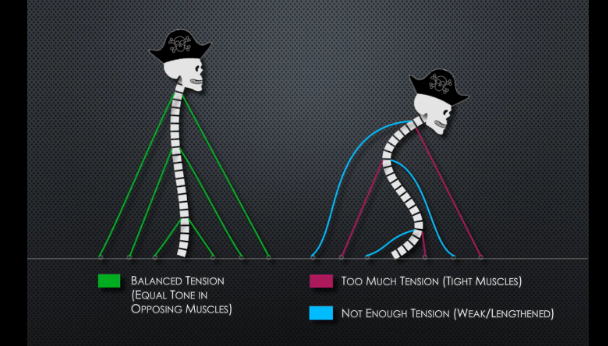
Muscles work like ropes pulling on a tent. When the tension is balanced, the tent stands tall and stable. But when one side pulls harder than the other, the tent leans, sags, or collapses.
That’s exactly what happens in our bodies:
- Tight hip flexors pull the spine and pelvis forward, increasing wear and tear in the joints.
- Weak or “shut down” muscles like the glutes and deep core can’t counterbalance this pull.
- Over time, this misalignment creates friction, degeneration, and pain, especially in the lower back, hips, or neck.
Wherever your body’s weakest link is, that’s usually where pain shows up. For many people, it’s the lower back because it’s so closely connected to the core.
Unfortunately, low back pain is the leading cause of disability worldwide, affecting an estimated 619 million people. And when researchers compare people with chronic low back pain to those without back pain, they often find measurable differences in the support system around the pelvis being more common in people with chronic low back pain.
The Stress Connection
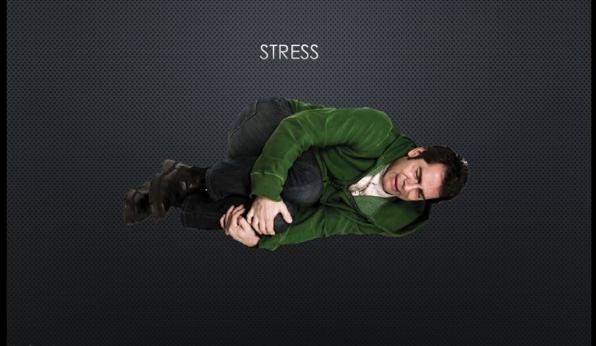
Muscle imbalances are often tied to stress. In moments of danger, our bodies naturally curl into a protective posture (think fetal position).
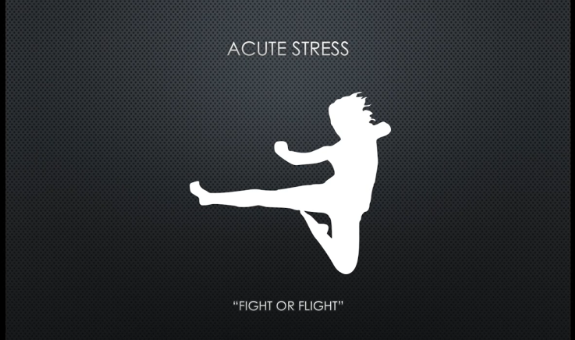
Over time, this stress-driven response locks us into poor posture and makes pain worse. With chronic stress, this posture becomes permanent. Certain muscles tighten, while others shut down completely through a process called reciprocal inhibition. Over time, that protective posture can start to feel like your new normal, especially if you’re already spending long hours in a closed position.
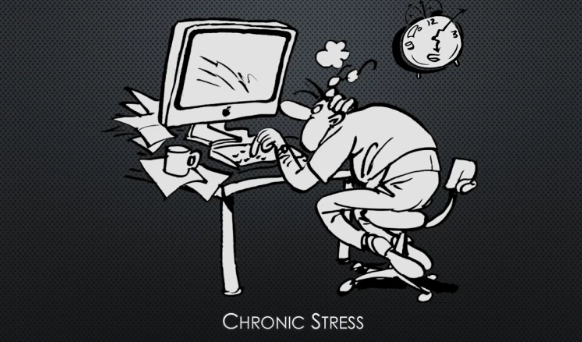
There’s good evidence that stress and back pain are linked. Research has found associations between perceived stress and the odds of experiencing low back pain. In other words: it’s not “in your head.” Stress can absolutely change the way you move, brace, and recover on a physical level.
Why Traditional Fixes Fall Short
You can’t just stretch one muscle and strengthen another to “fix” posture. That approach is unnatural and nearly impossible to maintain. Even treatments like chiropractic or surgery don’t retrain the body. They offer temporary relief but not lasting change.
This is also why passive approaches can have a ceiling. Hands-on care, adjustments, injections, even surgery can be appropriate in the right context, but none of them teach your nervous system how to hold alignment and distribute load.
Clinical guidelines for persistent low back pain consistently emphasize exercise, education, and active rehabilitation as core components of longer-term improvement.
The truth is, the solution has to come from inside you. You’re the only one who can retrain your body to move in balance again. If you’re trying to figure out how to fix muscle imbalances, you need to take a mindful and active approach.
Enter Core Balance Training
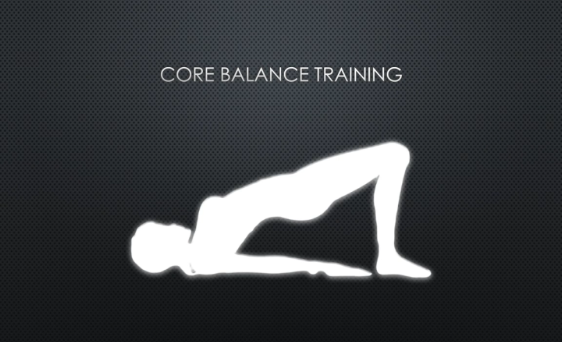
Core Balance Training was designed to reverse muscle imbalances in a natural, lasting way. Instead of focusing on isolated muscles, it looks at the whole system.
The method is based on how we all originally developed strong, balanced cores, as infants. Think about it: by the time we were toddlers, we could squat, crawl, stand, and move with perfect posture without anyone teaching us. We built strength by pushing away from the floor with the simple intention to look around at the world around us. Core Balance Training brings us back to that natural process.
Here’s why that matters if you’re wondering how to fix muscle imbalances. Most people need a progression that rebuilds awareness, deep-core support, and coordination so the “right” muscles provide support automatically. So, when it comes to answering “how long does it take to fix muscle imbalance,” it depends less on motivation and more on how consistently you retrain the pattern your body has been repeating for years.
The Four Phases of Core Balance Training
Core Balance Training is organized into four phases so you’re not guessing how to fix muscle imbalances or bouncing between random exercises you find across the internet. Each phase builds on the last. Here’s how the progression works.
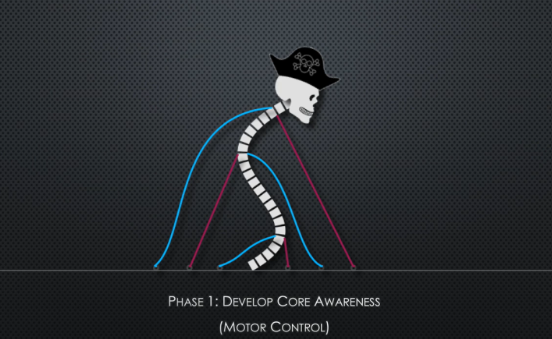
Phase 1: Awareness
Most people trying to fix a muscle imbalance jump straight into some random exercise they found online. The problem is that if your nervous system isn’t using the right muscles, nothing will change. This phase is about rebuilding awareness and control so your body can feel the difference of true support.
Research around back pain consistently highlight that long-term improvement isn’t just about raw strength—it’s also about motor control and learning to coordinate the right muscles at the right time.
Phase 2: Activation & Strengthening
Once the “right” muscles are activated, this phase helps you build capacity. That means focusing on strengthening without compensation. That matters because muscle imbalance often persists not because you can’t do an exercise, but because your body keeps defaulting to the same dominant muscles when you aren’t thinking about it.
This is where technique becomes the difference-maker.
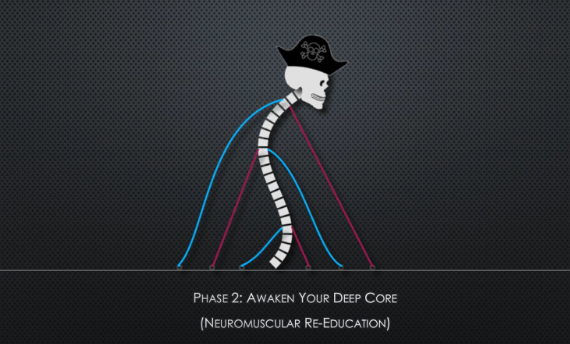
Here’s what you’ll learn in phase 2:
- Develop endurance in the newly awakened muscles.
- Focus on form and coordination, no compensation or “cheating” with stronger muscles.
- Exercises like the bridge are introduced, but with strict attention to core connection and proper breathing to leverage intra-abdominal pressure.
Phase 3: Core-Based Movement
A huge reason people feel stuck is that they can do corrective exercises on the floor, but the moment they stand up, lift something, or move quickly, the old pattern returns. In Phase 3, we take the deep-core connection and balanced tension you’ve built and apply it to your daily life and movements.
If you’re serious about how to fix muscle imbalances, this is the part where your real-life movements are retrained. It’s also where many people notice their posture improving naturally, because the body is no longer relying on the same weak link to stabilize everything.
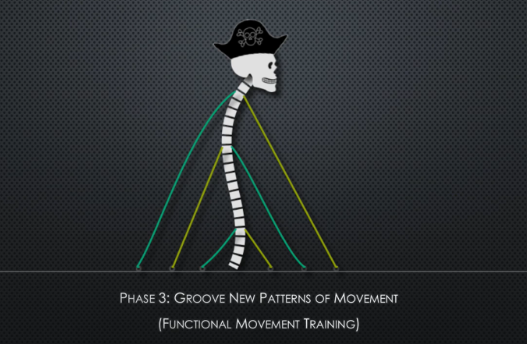
Here’s what you’ll learn in phase 3:
- Apply core engagement to real-life movements: standing, squatting, deadlifting, pushing, or even getting up off the floor.
- The focus is on moving from the core outward, ensuring every action is powered and stabilized from the center.
- This phase helps prevent old compensations from sneaking back in.
Phase 4: Maintenance
Even after you feel better, life can pull you right back into old patterns.
This phase provides the honest answer to how long does it take to fix muscle imbalance question. The answer is that most people can make meaningful progress in weeks, but lasting change comes from this maintenance phase.
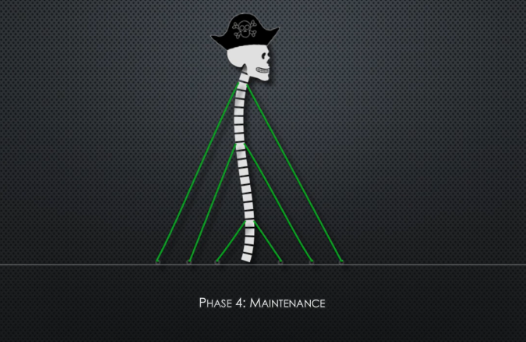
During the maintenance phase, you’ll learn:
- Just like brushing your teeth, a few minutes of daily practice keeps your body balanced.
- Simple exercises help reset your posture after sitting at a desk, long drives, or stressful days.
- This phase never ends. It’s a sustainable, lifelong way to keep your body healthy and pain-free.
Why It Works
Core Balance Training doesn’t fight against your body. Instead, it works with it. Instead of forcing posture corrections or isolating single muscles, it restores the natural harmony of the whole system.
By reconnecting with your deep core and balancing tension across the body, you:
- Reduce joint friction and degeneration.
- Relieve chronic pain.
- Improve strength and posture naturally.
- Move through life with stability and confidence.
That matters because muscle imbalance is rarely just a strength problem. That’s why CBT starts with awareness and deep-core connection, then builds endurance and muscle memory.
It also works because it’s realistic. Core Balanced Training is designed around small daily practice that keeps the deep core engaged and the body balanced.
So, if you’re trying to figure out how to fix muscle imbalances, you need a progression that retrains your body’s default pattern. Core Balance Training has been proven to do this.
FAQ: Reversing Muscle Imbalances
How do I fix muscle imbalances at home without overthinking it?
It’s all about retraining how you move so you don’t go right back into the same compensation when you’re tired or stressed. With the right program (like Core Balance Training), you can do this in just 15 minutes a day.
How long does it take to fix muscle imbalance?
It really depends on how long you’ve had the pattern, how consistent you are in fixing it, and which exercises you’re doing. For many people, minor imbalances can start improving in just seven days. With Core Balance Training, all you need is 15 minutes a day to retrain your movements to fix your muscle imbalance.
Are stretches enough, or do I need strengthening too?
Stretching alone can reduce tension temporarily, but if the opposing muscles still aren’t doing their job, your body will default right back to the same posture. The best results come from pairing gentle mobility with strength + coordination work (especially glutes, deep core, and mid-back, depending on your pattern).
How do I know I’m fixing the imbalance and not just compensating better?
If you’re actually fixing the muscle imbalance, you’ll notice:
- The weaker side starts to feel more stable and coordinated.
- Less twisting, rib flare, and low-back pain
- You can maintain form when you’re slightly fatigued
Final Thoughts About How to Fix Muscle Imbalances
Core Balance Training isn’t about chasing perfect posture or forcing your body into positions, it’s about reawakening the natural balance you were born with. When your deeper stability muscles come back online, movement feels easier, your joints are better supported, and pain no longer has to be the guiding factor in what you can or can’t do.
The real beauty of this approach is that it’s sustainable. You don’t need hours in the gym or a complicated routine. Just a few focused minutes each day can be enough to keep your body open, balanced, and resilient.
And that’s the art of core balance, learning to move from a place of strength and stability so you can feel good in your body and keep doing the things you love for years to come.
To learn more, check out our Free 15 Minute Masterclass video or sign up for your Free 7 Day Trial.
About the Author
Dr. Ryan Peebles is a Doctor of Physical Therapy specializing in spine and core rehabilitation since 2015. He has helped over 40,000 people overcome chronic back pain through his program Core Balance Training. In addition to his professional experience, he gained deep insight from a decade-long personal struggle to overcome lower back pain.